Study pathways
Five divisions, one Practice Framework
Every Solvarienne pathway is built on the same four-stage instructional model — observe, rehearse, assess, certify — and graded by a kaiako who did not teach the cohort. Whether the subject is the roulette wheel, the casino cage or the casino management office, the divisions differ in subject and depth, never in rigour.
- Divisions
- 5
- Campuses
- 3
- Next intake
- Intake 12, 6 Oct
- Currency
- NZ$
Pathway overview
Individual applicants usually begin with the Croupier School or Dealer Academy, training on roulette, blackjack, baccarat and poker tables. Working professionals more often enter through Service Excellence or the Casino Management diploma, and casino operators through a corporate engagement.

Dealer Academy
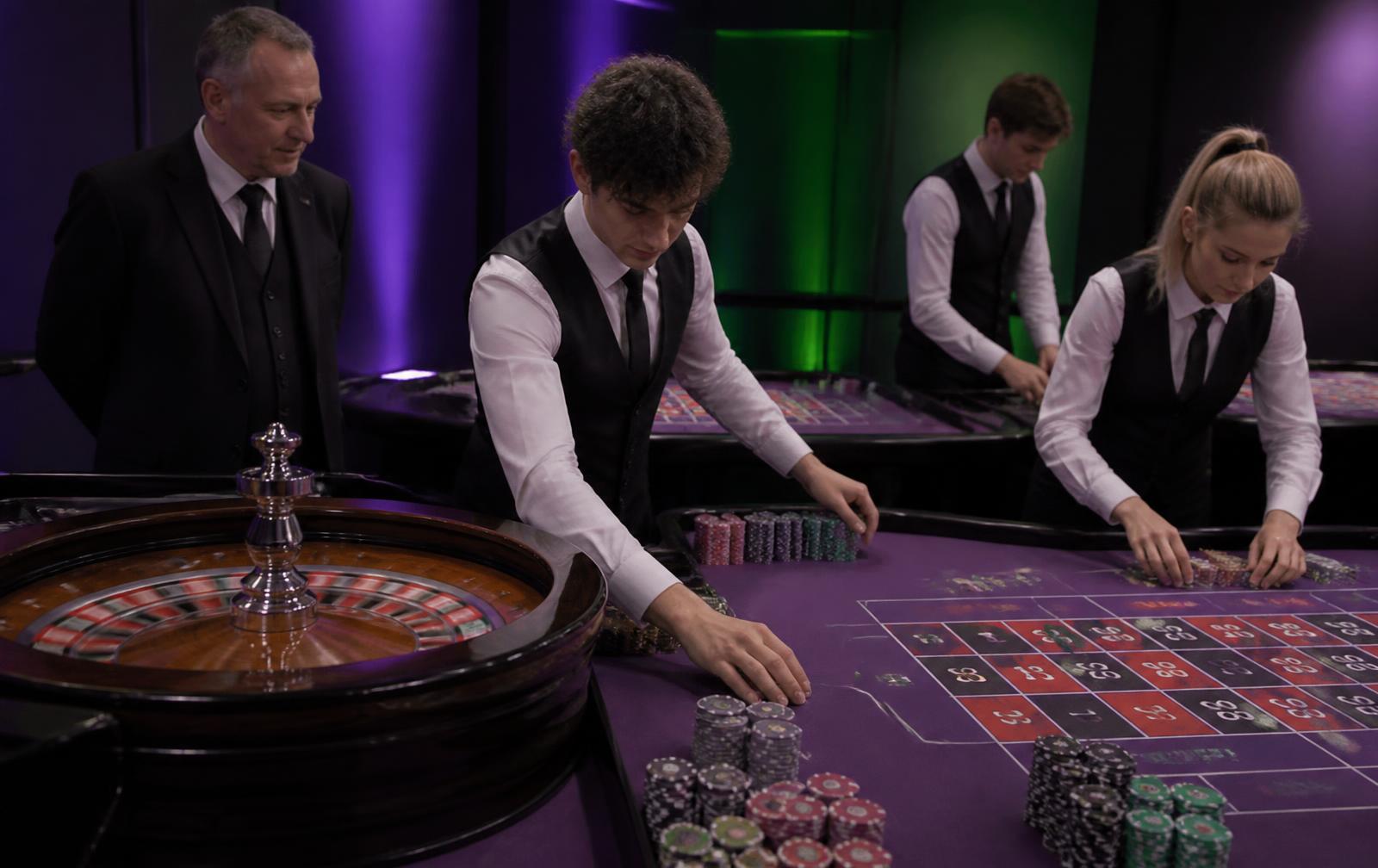
Roulette, blackjack, baccarat and poker dealing, game protection, casino AML/CFT and Host Responsibility conduct, and 412 supervised practical hours on live-style casino tables, concluding in externally examined certification.

Croupier School
Craft-intensive casino workshop training across 58 graded exercises, developing chip-handling, card technique and casino cage-standard cash-control skills to published speed and accuracy benchmarks.

Casino Management
Pit and shift leadership, casino cage and chip control oversight, DIA casino licensing compliance, casino surveillance liaison and workforce planning, assessed through an improvement project defended before an external panel.

Service Excellence
VIP casino host relations, guest communication, Host Responsibility conversations and duty of care, assessed in scenario workshops with trained role-players.
Corporate Training
Audit-led enterprise learning architecture for partner casino operators, with pit, cage and surveillance onboarding, role pathways, supervisory certification and a transferable assessment system.
Side-by-side comparison
Indicative figures for the default full-time format of each casino training pathway. Evening, block-release and on-site variants follow the same assessment standard over an extended calendar.
| Pathway | Duration | Practical share | Entry level | Assessment | Credential |
|---|---|---|---|---|---|
| Dealer Academy | 16 weeks | 68% | None required | External examiner | Certificate, Level 4 |
| Croupier School | 12 weeks | 82% | None required | External examiner | Certificate, Level 4 |
| Casino Management | 24 weeks | 35% | 12 months' experience | Panel defence | Diploma, Level 6 |
| Service Excellence | 8 weeks | 62% | None required | Scenario assessment | Certificate, Level 3 |
| Corporate Training | Tailored | Varies | Organisational | Framework-based | Client-branded |
How the credentials stack
Credentials are mapped to one Practice Framework, so nothing is studied twice. A learner entering at entry level on the casino floor can reach the Casino Management diploma without repeating a single module.
Certified Casino Dealer or Croupier
Entry to the licensed casino gaming floor with assessed practical hours on roulette, blackjack, baccarat and poker.
Specialist practitioner
Additional table disciplines, premium high-limit tables, casino cage work or VIP host specialisation.
Supervisory certification
Pit supervisor or shift responsibility, casino surveillance liaison, coaching and escalation authority.
Diploma in Casino Management
Casino department and property leadership, DIA licensing compliance and commercial accountability.
Four ways to study
Every mode delivers the same competency framework and assessment standard — only the calendar changes.
Full-time
Monday–Friday, daytime
The default format for the Dealer Academy, Croupier School and Service Excellence. Fastest route to certification.
Evening
Two evenings + one Saturday weekly
Runs the same curriculum over an extended calendar for learners working alongside study, mainly in Wellington.
Block release
One week per month, on campus
Used for the Casino Management diploma so working supervisors can study without leaving a role.
On-site corporate
At the client venue, scheduled to shift patterns
Delivered by Solvarienne kaiako on location for pre-opening projects and enterprise workforce development.
Fees and payment options (NZ$)
Fees include assessment costs, moderation and issue of the final credential. Payment plans are available on every pathway except tailored corporate engagements.
| Pathway | Total fee | Payment options | Included |
|---|---|---|---|
| Dealer Academy | NZ$6,450 | Deposit + 3 instalments | Tools & uniform allowance included |
| Croupier School | NZ$5,200 | Deposit + 3 instalments | Practice kit included |
| Casino Management | NZ$8,900 | Deposit + 4 instalments | Panel-defence assessment included |
| Service Excellence | NZ$3,100 | Deposit + 2 instalments | Scenario workshop materials included |
| Corporate Training | Quoted per engagement | Milestone billing | Scoped after a training needs audit |
StudyLink loans and allowances apply to eligible NZQA Level 3–6 pathways. Ask admissions about employer-sponsored and corporate-billed places.
When you can start
| Intake | Start date | Campuses | Status |
|---|---|---|---|
| Intake 10 | 9 February | Auckland, Wellington, Queenstown | Closed |
| Intake 11 | 22 June | Auckland, Wellington, Queenstown | Closed |
| Intake 12 | 6 October | Auckland, Wellington, Queenstown | Open for applications |
| Intake 13 | 9 February (2027) | Auckland, Wellington, Queenstown | Waitlist open |
What you need to apply
- Minimum age 18, with NCEA Level 2 or equivalent for most entry-level pathways.
- A clean police vetting check, required under DIA casino licensing regulation for all casino gaming-sector credentials.
- Casino Management applicants need 12 months' verified hospitality or gaming experience.
- A 30-minute admissions interview and diagnostic entry review for every individual applicant.
- Corporate Training engagements begin with a training needs audit rather than individual entry criteria.
Common questions
All mapped to one competency framework.
Auckland, Wellington, Queenstown.
Across all individual pathways in 2025.
Recognising Solvarienne credentials nationwide.
Not sure which pathway fits?
A thirty-minute conversation with an admissions adviser, followed by the diagnostic entry review, will place you on the route most likely to lead to employment — not just the one that sounds impressive.