Dr Miriama Walsh
Principal & Chair, Academic Board
Former casino compliance and AML/CFT training director for a South Island casino operator. Oversees curriculum governance and moderation across all three campuses.
About the institute
Solvarienne was founded in 2006 by three Auckland casino operations managers who could not find a training provider whose certificates told them anything useful about a candidate's readiness for the pit. Two decades on, the institute has certified more than 38,400 casino croupiers, dealers and managers across three campuses to a single practice framework.
Solvarienne began with a specific frustration. Its three founders, all senior casino operations managers on the Auckland waterfront, kept hiring dealers and pit staff whose certificates described attendance rather than capability at the table. Interviews had to test dealing mechanics, chip handling and game protection from first principles, probation periods dragged, and the sector's reputation for informal, on-the-job-only casino training persisted.
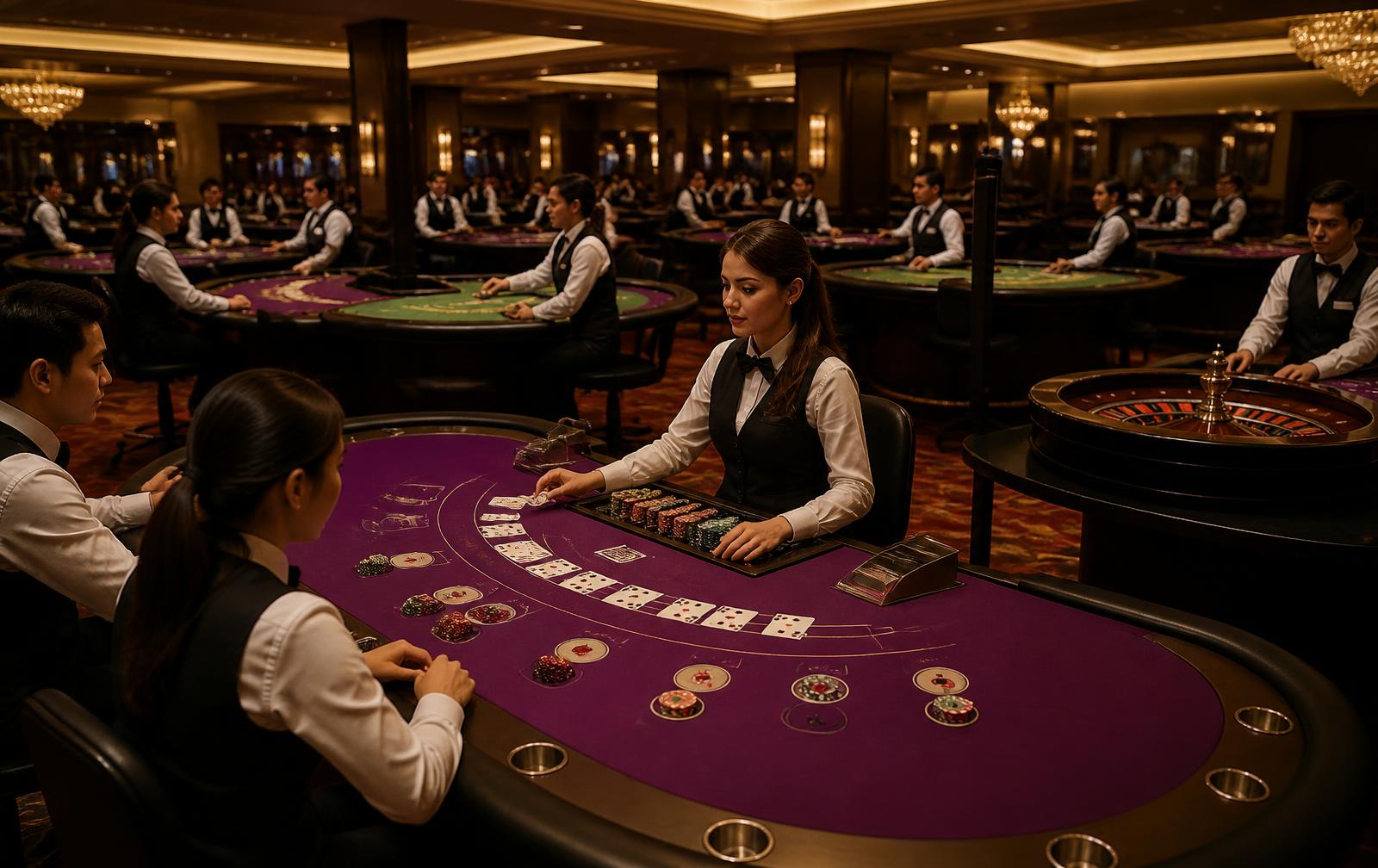
Their answer was to design an institute backwards from the casino floor. They documented what a competent dealer, croupier, pit supervisor or duty manager actually does under pressure at the roulette wheel, blackjack table, baccarat table or poker room, expressed each behaviour as something an assessor could observe and score, and built a curriculum capable of producing that behaviour reliably — including in people who had never set foot in a casino.
In 2009 the institute separated teaching from grading for the first time in New Zealand casino education, introducing independent examiners with no stake in a cohort's pass rate. That decision, more than any marketing since, is why casino operators trust the certificate. Divisions followed as the sector asked for them — croupier craft in 2012, casino management in Wellington in 2015, a hospitality studio in Queenstown in 2020.
Today the Solvarienne Practice Framework governs all five divisions across three campuses, aligned to NZQA levels and DIA casino licensing requirements, and reviewed twice yearly by an Industry Advisory Board of working casino operators. The founding question has not changed: is the graduate ready for the casino floor on day one?
To raise the professional standard of Aotearoa's casino gaming workforce — dealers, croupiers, pit supervisors, casino cage staff and casino managers — through education that is rigorous, verifiable and directly connected to employment.
A casino industry in which every professional role — from first table shift on the gaming floor to casino general manager — is entered through structured education and independent certification.
Capability is built through supervised repetition against a documented standard, measured by a kaiako with nothing to gain from the result. Everything else is commentary.
Every module we teach — from roulette and blackjack dealing to casino cage procedure and Host Responsibility — is mapped to a shared, NZQA-aligned framework of four instructional stages, so a credit earned in one division is never repeated in another.
Learners study documented, filmed standards of correct casino floor, dealing and service behaviour before ever attempting the task.
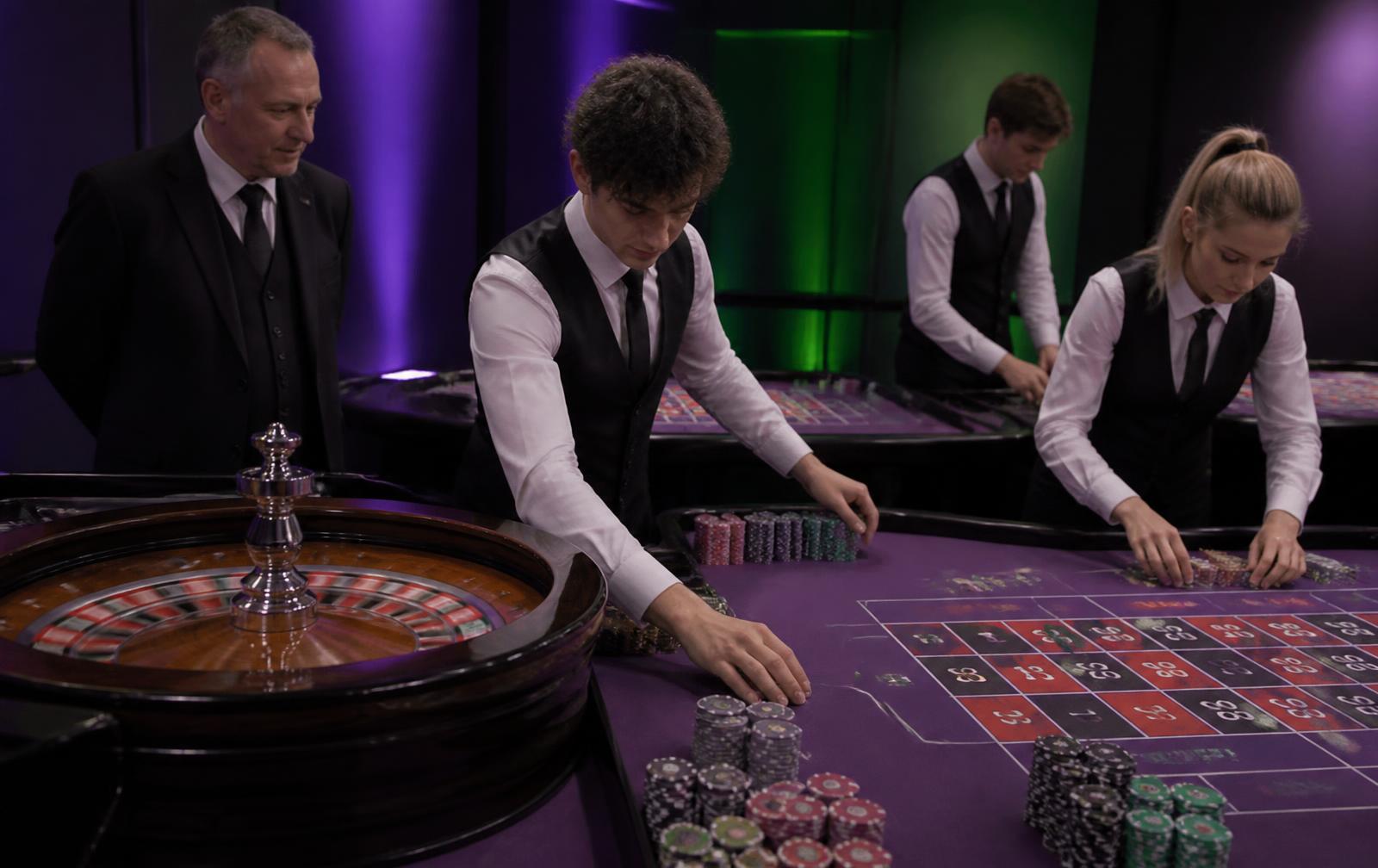
Supervised, graded repetition at roulette, blackjack, baccarat and poker practice pits and casino simulation studios under a kaiako, not unsupervised trial and error.
Performance is scored against a published rubric by an examiner who did not teach the cohort.
A credential is issued only once a learner meets every published criterion — not on attendance or elapsed time.
Three former casino pit operations managers open a single training room above a Wynyard warehouse with nine students in the first croupier intake, teaching roulette and blackjack from a single practice table.
Assessment is separated from teaching for the first time in New Zealand casino education, a governance model the institute still uses for dealer, croupier and pit supervisor certification.
The craft-intensive division launches with a graded exercise system built from casino surveillance footage of actual pit shifts across three Auckland casino properties, covering roulette, blackjack, baccarat and poker.
A dedicated campus in Te Aro is founded after casino operators report a shortage of formally trained pit supervisors, shift managers and casino cage managers.
The institute's competency model is formalised, aligned against NZQA levels and mapped to DIA casino licensing requirements, becoming the shared spine for all five divisions.
A purpose-built service and VIP casino host studio opens in Frankton to serve the alpine casino resort and tourism sector.
Cumulative graduate numbers of certified croupiers, casino dealers and casino managers pass the milestone across three campuses and every division.
On-site delivery expands to cover pre-opening workforce projects for two new regional casino resorts in a single year, including full casino cage and surveillance team onboarding.
The Practice Framework is revised for its third cycle to reflect updated DIA casino licensing and Host Responsibility requirements, and the institute opens applications for its twentieth anniversary intake.
Every criterion we assess against — from chip-handling accuracy at the roulette wheel to cash-handling discipline at the casino cage — is published before a class begins. A credential that is easy to obtain protects nobody, least of all the graduate carrying it onto a live casino floor.
Hospitality is a duty of care before it is a transaction. We teach casino floor, dealing and Host Responsibility craft with the same respect for people that we expect our graduates to show every player at the table.
A casino dealing certificate issued in Queenstown carries the same rubric, moderation and examiner independence as one issued in Auckland or Wellington, so every partner casino operator can trust it equally.
We track whether graduates are hired, retained and promoted — not enrolment numbers or satisfaction surveys taken in isolation.
Final table-games and casino AML/CFT assessments are graded by kaiako with no stake in a cohort's pass rate, and results are reviewed annually by the Academic Board.
Our Industry Advisory Board of casino operators reviews every division's curriculum twice a year so teaching tracks what the pit, the cage and casino surveillance actually need.
Each campus teaches to the same framework, uses the same rubrics and takes part in shared moderation, so results are directly comparable to every partner casino operator nationwide.
Level 6, 128 Wynyard Reach
Home campus and Academic Board
44 Tarawhiti Lane, Te Aro
Casino management and corporate delivery
9 Kawarau Terrace, Frankton
Service excellence and VIP relations
The Solvarienne Practice Framework maps every division's outcomes to NZQA levels and DIA casino licensing categories, reviewed on a rolling three-year cycle.
A standing commitment, audited annually, that final table-games and casino management examinations are graded by kaiako who did not teach the cohort.
Casino Host Responsibility, player protection and AML/CFT awareness are embedded in every curriculum and separately examined.
Every member of the academic leadership team held operational responsibility on a casino gaming floor before joining the institute, and all continue to teach or assess.
Principal & Chair, Academic Board
Former casino compliance and AML/CFT training director for a South Island casino operator. Oversees curriculum governance and moderation across all three campuses.
Head of Casino Management Faculty
Fourteen years as a casino duty manager and pit operations lead on an Auckland casino gaming floor before designing the diploma's five-accountability leadership model.
Director of Croupier & Dealer Education
Nineteen years dealing roulette, blackjack, baccarat and poker across New Zealand and Australian casinos; author of the institute's game protection and hand-mechanics syllabus.
Principal Instructor, Service Excellence
Built VIP casino host and guest relations programmes for alpine casino resorts in Queenstown; author of the five-element manaakitanga service model.
Director of Corporate Partnerships
Enterprise learning architect responsible for three casino pre-opening workforce projects, including casino cage and surveillance onboarding, and Solvarienne's on-site delivery model.
Lead Assessor & Head of Moderation
Over 4,200 supervised table-games and casino compliance assessments completed; responsible for calibrating examiners across Auckland, Wellington and Queenstown.
Six senior casino operators from across Aotearoa's gaming and hospitality sector review every curriculum twice a year.
Across Auckland, Wellington and Queenstown.
With agreed hiring pathways across Aotearoa.
Across all individual programmes in 2025.
Casino dealer, croupier, casino management, service, corporate.
Our instructors are practitioners who moved into teaching by choice. Our learners are treated as future colleagues of the operators who will hire them. Our administration exists to remove obstacles from learning rather than to administer it for its own sake. That culture is why instructor retention exceeds ninety per cent, and why graduates return as guest assessors year after year.
Intake 12 opens 6 October. Book a tour of Auckland, Wellington or Queenstown, or speak with admissions before you apply.